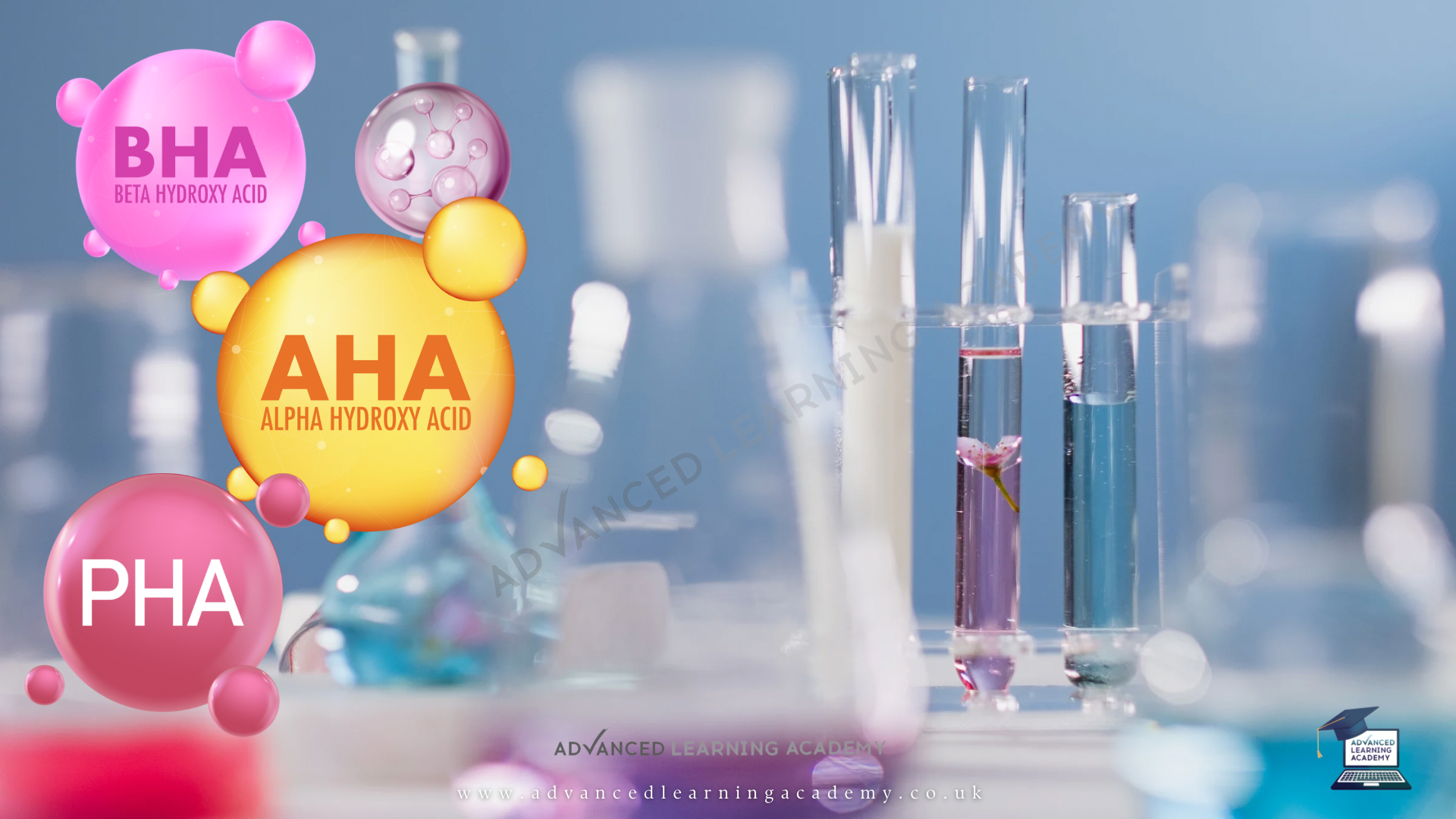
Alpha Hydroxy Acids (AHAs)
Glycolic Acid
Glycolic acid, derived from sugar cane, has the smallest molecular size of all AHAs, allowing it to penetrate the skin efficiently. It is widely used to improve dullness, fine lines, mild pigmentation, and uneven texture.
Best for:
• Ageing skin
• Sun damage
• Uneven tone and texture
Lactic Acid
Lactic acid is a gentler AHA derived from fermented milk or plant sources. It exfoliates while also improving hydration by supporting the skin’s natural moisture factors.
Best for:
• Dry or sensitive skin
• Dehydrated or dull skin
• First-time peel clients
Mandelic Acid
Mandelic acid has a larger molecular structure, resulting in slower penetration and reduced irritation. It also has antibacterial properties, making it particularly useful in acne-prone skin.
Best for:
• Acne
• Rosacea-prone skin
• Fitzpatrick skin types IV–VI
Beta Hydroxy Acids (BHAs)
Salicylic Acid
Salicylic acid is oil-soluble, allowing it to penetrate deeply into pores and dissolve excess sebum and debris. It also has anti-inflammatory properties, making it ideal for breakout-prone skin.
Best for:
• Oily and acne-prone skin
• Congested pores
• Comedonal acne
Polyhydroxy Acids (PHAs)
Gluconolactone & Lactobionic Acid
PHAs are newer-generation exfoliating acids with a larger molecular size, offering gentle exfoliation with minimal irritation. They also provide antioxidant and hydrating benefits.
Best for:
• Sensitive skin
• Compromised skin barriers
• Post-procedure or reactive skin
Trichloroacetic Acid (TCA)
TCA is a powerful acid used for medium-depth chemical peels. It penetrates deeper into the skin to address more advanced concerns such as deeper pigmentation, scarring, and moderate photoageing.
Best for:
• Acne scarring
• Advanced pigmentation
• Moderate sun damage
Note: TCA peels require advanced training and careful client selection.
Retinoic Acid (Vitamin A Peels)
Retinoic acid peels work by increasing cell turnover and stimulating collagen production. These peels are often left on the skin for several hours and washed off at home.
Best for:
• Acne
• Pigmentation
• Fine lines and uneven texture
Phenol (Deep Chemical Peels)
Phenol peels are deep resurfacing peels used in medical settings only. They provide dramatic results but carry higher risks and extended downtime.
Best for:
• Severe photoageing
• Deep wrinkles
Phenol peels are not typically used in non-medical aesthetic practice.
Choosing the Right Acid
Selecting the correct chemical peel acid depends on several factors:
• Skin type and Fitzpatrick classification
• Primary skin concern
• Skin sensitivity and barrier function
• Previous peel history
• Downtime tolerance
A thorough consultation and patch testing are essential to ensure safety and optimal outcomes.
Chemical peel acids are powerful tools when used correctly. From gentle PHAs to advanced TCA formulations, each acid has a specific role in skin rejuvenation. A solid understanding of acid types, skin physiology, and contraindications is fundamental for any aesthetic or skin practitioner offering peel treatments.
Interested in learning more?