Lip fillers are one of the most popular non-surgical aesthetic treatments, offering subtle enhancement, improved symmetry, and restoration of volume. When performed correctly and conservatively, lip filler treatments can enhance the natural shape of the lips while maintaining facial harmony and expression.
Understanding how lip fillers work, their purpose, and the importance of anatomy-led treatment is essential for achieving safe and natural-looking results.
Lip fillers are injectable treatments, most commonly made from hyaluronic acid (HA) — a substance naturally found in the body that attracts and retains moisture. In the lips, hyaluronic acid fillers are used to add volume, define shape, improve hydration, and restore age-related volume loss.
Because HA fillers are temporary and reversible, they are widely used in aesthetic practice.
Clients seek lip fillers for a variety of reasons, including:
• Enhancing natural lip shape
• Improving lip symmetry
• Increasing volume subtly
• Defining the vermilion border
• Improving lip hydration and texture
• Replacing volume lost through ageing
A skilled practitioner focuses on balance and proportion, rather than overfilling or altering the natural anatomy
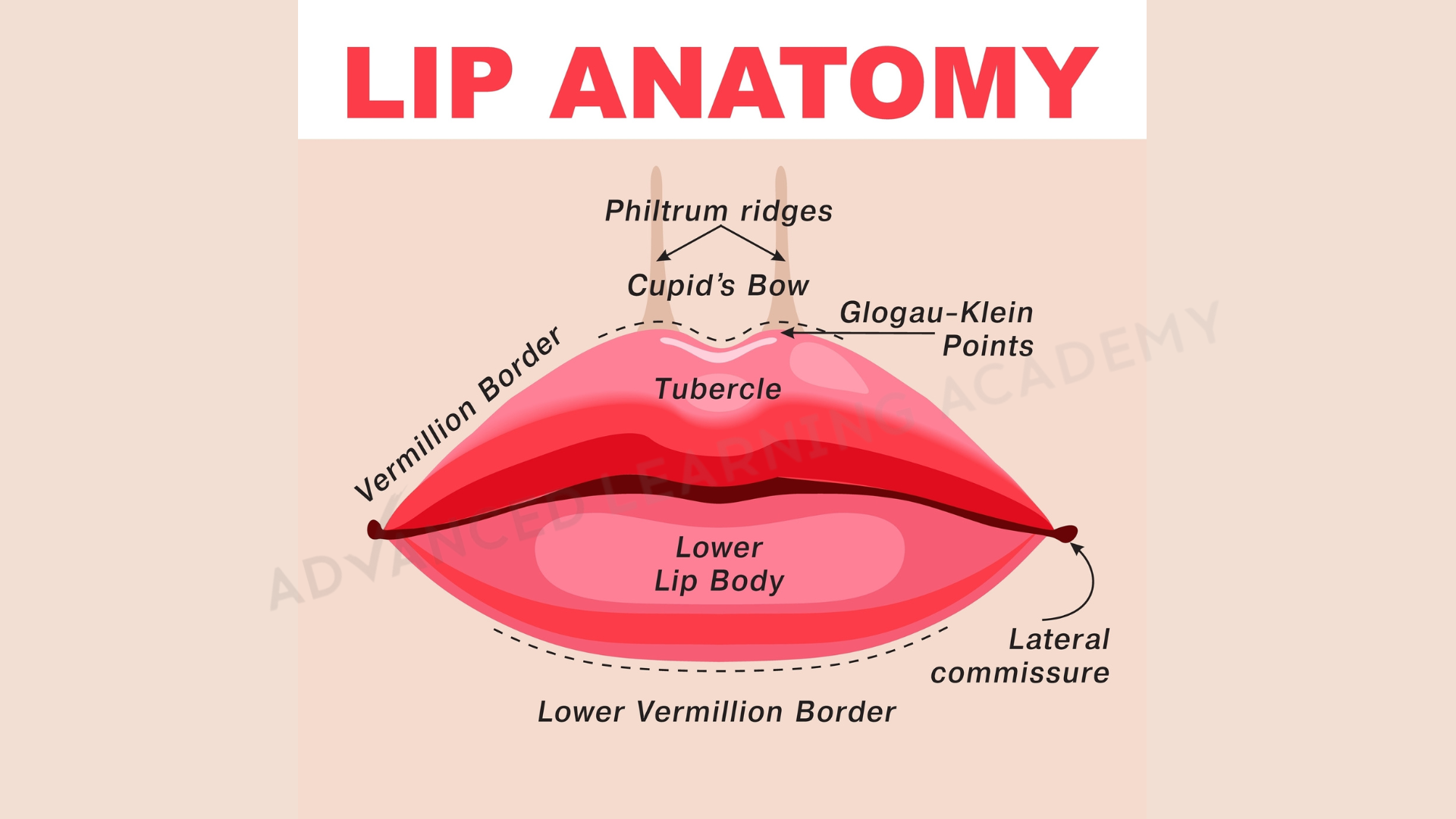
Successful lip filler treatment relies on a detailed understanding of lip anatomy, including:
• The vermilion border
• Cupid’s bow
• Philtral columns
• Orbicularis oris muscle
• Vascular structures such as the labial arteries
Treating the lips without respecting anatomical structure increases the risk of complications and unnatural outcomes. Anatomy-led treatment planning is essential for both safety and aesthetics.
One of the most important principles in lip filler treatments is conservatism. Natural-looking lips are achieved by:
• Using appropriate filler type and viscosity
• Injecting small amounts gradually
• Respecting natural lip proportions
• Assessing movement, not just static shape
Over-treatment can compromise lip function, expression, and long-term tissue health.
As we age, lips naturally:
• Lose volume and definition
• Become thinner and less hydrated
• Develop fine lines around the mouth
Lip fillers can be used not only for enhancement, but also for restorative and rejuvenative purposes, helping to soften perioral lines and restore youthful contour while maintaining a natural appearance.
Lip fillers should always be preceded by a thorough consultation and assessment, including:
• Medical history and contraindications
• Facial proportions and symmetry
• Client expectations
• Risk discussion and informed consent
Proper training, sterile technique, and knowledge of complication management are essential for safe practice.
Lip fillers are a powerful aesthetic tool when used thoughtfully and responsibly. With an anatomy-led approach and a focus on subtle enhancement, lip fillers can improve confidence while preserving individuality and natural beauty.
Education, assessment, and conservative practice are key to achieving consistently safe and satisfying outcomes.