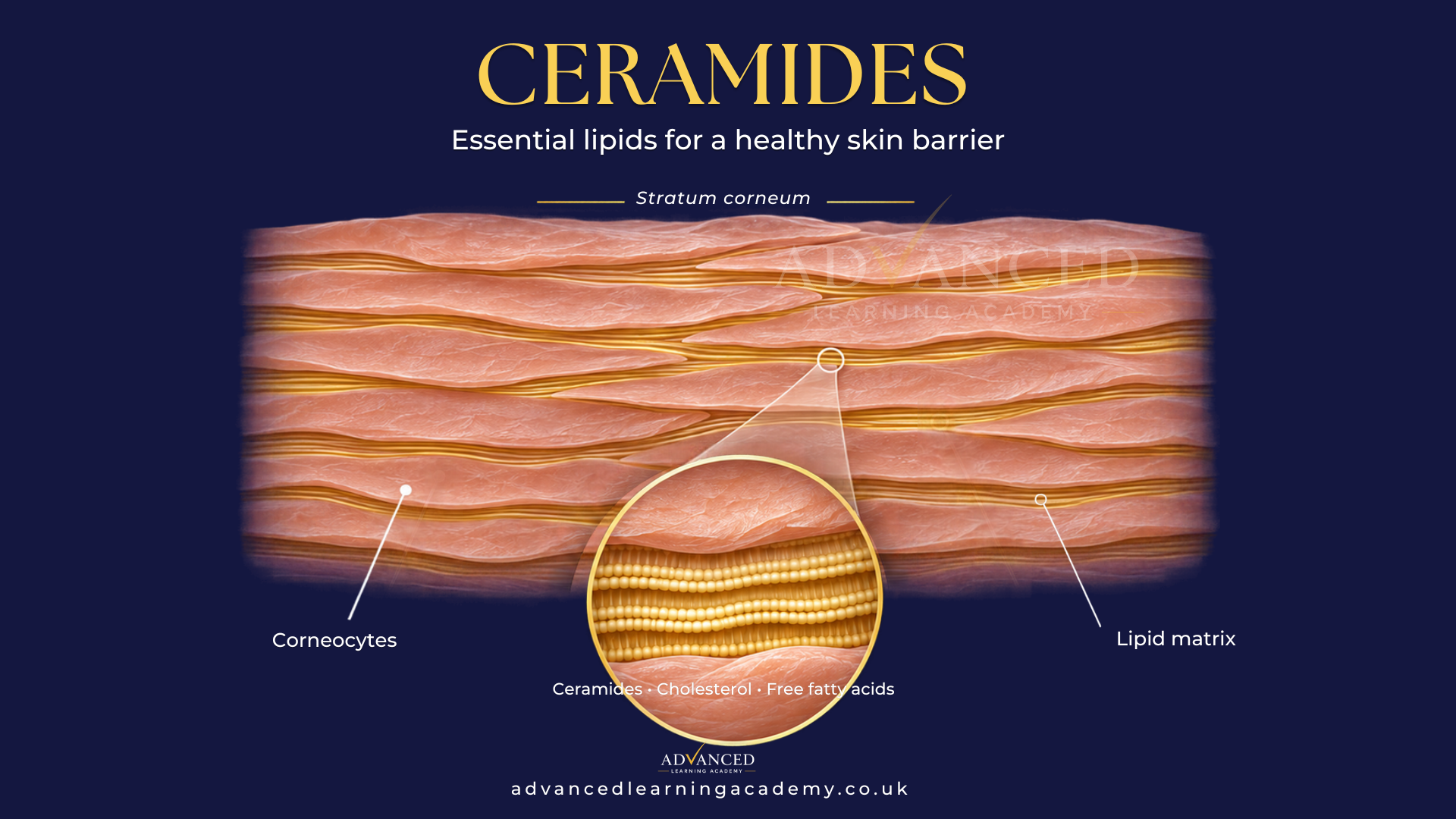
Water naturally moves from deeper skin layers towards the surface and evaporates. This process is called **transepidermal water loss**, or TEWL.
The lipid layers within the stratum corneum help restrict this movement. When their structure is disrupted, the barrier can become less effective at retaining water.
Ceramides contribute to the organised lipid structures that make this barrier work. Their role is therefore different from simply attracting water: they help create the conditions that allow skin to retain it
Skin with impaired barrier function may feel dry, rough, tight or uncomfortable. Some people notice flaking or increased sensitivity to products they previously tolerated.
These signs are not specific to ceramide deficiency. Appearance alone cannot establish the cause, and persistent redness, itching or irritation may need clinical assessment.
For beauty and aesthetic professionals, the key is to recognise changes in skin condition and avoid assuming that every concern needs stronger exfoliation or another active ingredient.
Different moisturising ingredients perform different jobs
Humectants, such as glycerin and hyaluronic acid, help attract and hold water.
Emollients help soften and smooth the skin.
Occlusives, such as petrolatum, form a protective layer that reduces water loss.
Ceramides contribute to the skin’s barrier lipid system. A well-formulated moisturiser can combine several of these approaches, helping to improve hydration while supporting the skin barrier. Dermatologists identify ceramides among the ingredients to look for when choosing a moisturiser for dry skin
The word “ceramide” on a label does not tell the whole story.
Product performance depends on the overall formulation, including how the ceramides are incorporated and how they interact with other ingredients. Research highlights the importance of formulation when using ceramides to support an impaired barrier.
Rather than focusing on one ingredient alone, consider the complete product, its suitability for the individual, and how comfortably it fits into their routine.
Barrier care begins with consistent, gentle habits:
• Use a gentle cleanser.
• Avoid scrubbing dry or irritated skin.
• Apply a suitable moisturiser regularly.
• Review exfoliation and active products if the skin becomes uncomfortable.
• Seek professional advice for persistent or worsening symptoms.
Understanding ceramides connects skin anatomy with practical skincare decisions. It helps practitioners explain why a client may need a simpler routine, why hydration and barrier support have different roles, and why treatment planning should consider the condition of the skin’s surface.
At the Advanced Learning Academy, we believe that understanding how skin works is the foundation of informed practice. Explore our online skin anatomy and skincare courses to develop your knowledge and strengthen your approach to client care.